
Description
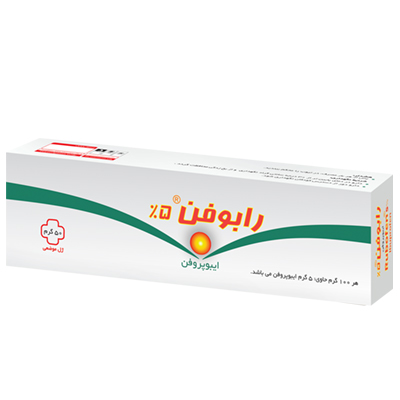
Are you tired of local pains such as neck pain, muscle pain, and back pain? Can't tolerate the pain until the pills and capsules take effect? Then your solution is to use a local painkiller. Rabofen is a pharmaceutical product that pharmacists have formulated in a local gel format, and this medicine contains 5 grams of ibuprofen per 100 grams. Rabofen topical gel is actually a local painkiller (non-steroidal anti-inflammatory drug or NSAID).
There are enzymes in the body that produce prostaglandins (chemicals that cause pain and inflammation), which are the main causes of pain. Ibuprofen topical gel can help treat and improve pain by inhibiting these enzymes, called cyclooxygenases.
Indications for use of Rabofen (ibuprofen) topical gel
Rabofen topical gel is available in pharmacies at an affordable price. This medicinal product has the ability to relieve pain and inflammation caused by some diseases. Since it is applied topically only to the painful area, other advantages of this drug include fewer side effects and ease of use. Although the uses of Rabofen topical gel are many, we will discuss some of them below:
- Reduces abdominal pain, back pain, and other local pain caused by menstruation and periods
- Relieves pain from surgeries, insect bites, and mild to moderate burns
- Relieving pain and inflammation caused by various types of arthritis, including rheumatoid arthritis and osteoarthritis
- Improving pain caused by sprains, tears, strains, and muscle and joint cramps
- Reducing pain and inflammation caused by sports injuries (ankle sprains, bruises, and muscle strains)
- Painkiller for tendonitis and bursitis
- Relieving rheumatic pain and inflammation
Contraindications for using ibuprofen topical gel
Although Rabon (ibuprofen) topical gel has many benefits, it is not always recommended for everyone. Underlying problems, age, gender, products and medications being used, etc. can be influential factors in choosing a pharmaceutical product. Contraindications to the use of Rabon (ibuprofen) topical gel include the following:
- Children under 12 years old
- Pregnant and breastfeeding women
- History of allergy to ibuprofen
- Concomitant use of oral medications containing ibuprofen
- People with underlying problems, including liver and kidney diseases
If you have any of the above conditions, you can use medication alternatives as recommended by your doctor to experience the least side effects and the most effectiveness.
Advantages of topical ibuprofen gel over oral form
Ibuprofen is produced as a painkiller all over the world in the form of capsules, tablets, ointments, lotions, suppositories, creams and topical gels. The advantage of using topical ibuprofen gel over its oral forms (capsules and tablets) is that it is applied topically, meaning it is only applied to the area of pain. Oral ibuprofens that have systemic absorption are completely absorbed throughout the body and have side effects such as kidney, liver and blood pressure problems. Other advantages of topical ibuprofen gel include:
- Fewer side effects than oral types
- Suitable for the elderly and the elderly
- Reduced systemic side effects
- Without causing dependence or addiction
- Ease and convenience of use
- Less incidence of drug interactions
- Faster impact speed
- Reasonable and cheap price
- Local effect
Side effects of Rabofen (ibuprofen) topical gel
If you do not follow the instructions regarding the use of medications, drug interactions, long-term use, and excessive use, you may experience unwanted side effects. The following are some of the side effects of Rabofen topical gel:
- Skin rashes, including irritation, burning, itching, and skin inflammation
- Breathing problems and wheezing (seek immediate attention)
- Nausea and vomiting
- Fainting and lethargy
Drug interactions of Rabofen topical gel
Remember, one of the most important parts to pay attention to in the brochure of any medication is the drug interactions section, and by announcing the medications you are taking, you can help your doctor choose the right medication. Drug interactions of Rabofen or ibuprofen topical gel include the following:
- Selective serotonin reuptake inhibitors (fluoxetine, sertraline)
- Some corticosteroids (dexamethasone and prednisone)
- Blood thinners and anticoagulants (warfarin)
- Some antidepressants (lithium)
- Topical and oral diclofenacs
- Diuretics (hydrochlorothiazide)
- Topical and oral naproxen
- Alcohol and its derivatives
- Cyclosporine
- Methotrexate
- Lisinopril
- Phenytoin
Drug interactions are one of the main causes of problems and complications. If these points are not paid attention to, a person will suffer from more severe complications or unwanted, irreparable problems.
Tips for using Rabofen (ibuprofen) topical gel
If you have decided to use Rabofen topical gel to reduce pain and inflammation, it is better to know the most important points about it. Although these points seem very simple and obvious, if not followed, they may cause serious disorders and problems. We have done our best to explain to you all the points about using ibuprofen topical gel:
- Ibuprofen topical gel should never come into contact with mucous membranes. Mouth, eyes, and nose should be washed immediately if this product comes into contact with the product, and if severe side effects occur, the person should seek emergency medical attention immediately.
- Apply a very thin layer of Rabofen (ibuprofen) topical gel to the painful area, gently massaging it into the skin until it is well absorbed. (Do not bandage the area, as this will cause more absorption into the blood, which can have irreversible side effects.)
- This product should be stored below 30°C in a cool, dry place away from sunlight. Avoid freezing.
- Remember that pregnancy and breastfeeding are among the most sensitive periods in a person's life. During this period, never use medications without consulting a specialist.
- It is not permissible to use ibuprofen topical gel more than 4 times a day and you should only use it as needed according to the advice of a specialist. It is best to follow the instructions on the box, but it is usually recommended to use ibuprofen topical gel 3 to 4 times a day.
- As mentioned, one of the advantages of Rabofen topical gel over its oral form is that it takes effect more quickly. This pharmaceutical product usually begins to take effect after a few minutes.
- Simultaneous use of ibuprofen products orally and topically can cause poisoning and serious complications.
- Rinse the affected area well with lukewarm water and dry thoroughly with a towel.
- Do not use Rabofen (ibuprofen) topical gel on open, infected wounds.
- Do not recommend this medication to anyone else with similar symptoms as you, as it may not be suitable for them at all.
- Wash your hands well with soap and water before and after using Rabofen topical gel.
- Keep all medicinal products out of the reach of children.
- Close the tube tightly after each use.
Conclusion
Rabofen topical gel, also known as ibuprofen, is a nonsteroidal anti-inflammatory drug that is effective in treating local pain such as muscle pain, arthritis, and menstrual pain. This pharmaceutical product relieves pain by inhibiting enzymes that cause pain and inflammation. This pharmaceutical product is one of the products of Kish Medipharm Pharmaceutical Company, which is produced and supplied in 50-gram tubes.
Rabofen topical gel has many advantages, including low price, ease of use, fewer side effects than the oral form, and topical relief. However, it is not suitable for everyone and should be prepared and used in consultation with a pharmacist or physician.
Remember, the information mentioned is due to our social responsibility towards our beloved people, and we consider it our duty to provide information, but this information will in no way take precedence over the opinion of a medical professional.
Reviews
There are no reviews yet.